
We’ve been on enough roofs and around enough solar panels to know this – once birds decide a spot is theirs, they don’t give it up easily. You’ll see the same pattern over and over, droppings building up under panels, nesting material tucked into corners and birds coming back to the exact same ledge every morning like it’s part of their routine.
That’s usually when people start looking at bird spikes and repellents, and the first question is almost always the same, stainless steel or plastic?
The difference becomes pretty obvious once you’ve seen how they hold up in the real world. Plastic can look fine on day one but stainless steel is the one that keeps doing its job months and years later.
If you’re comparing bird spikes or looking into practical bird deterrents for your Rowville home, read on to find out more.
How Do Bird Spikes Work?
Bird spikes are pretty simple in principle. They stop birds from landing comfortably on a surface by making that spot awkward and unstable. The birds aren’t harmed, they just can’t settle in the same way they normally would.
The idea is to remove the easy landing spots and once that happens, birds usually move on pretty quickly.
Stainless Steel Bird Spikes – Built for the Long Haul.
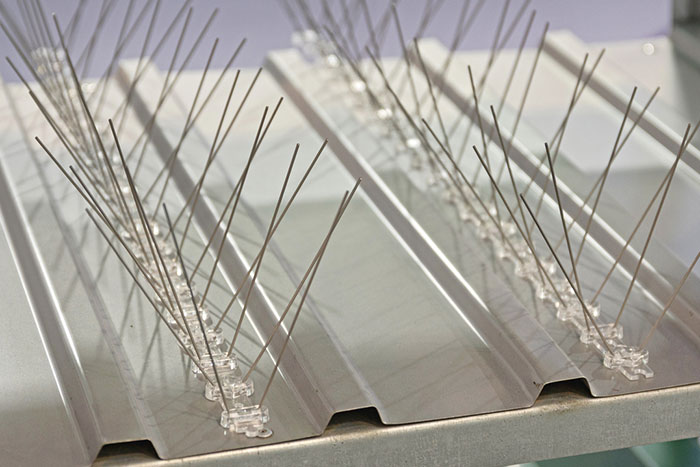
This is the option we install. Stainless steel bird spikes are made to handle weather properly. They don’t go soft in the sun, they don’t crack as easily and they keep their shape even after being out in the elements for years. That matters a lot when you’re installing them around solar panels or rooflines that are hard to access.
We’ve pulled off old plastic spikes that had gone brittle, faded or started breaking apart just from UV exposure and replaced with stainless steel options. They stays solid, which is exactly what you want when the whole point is to keep birds off in the first place.
A Cleaner, More Professional Finish.
This is one of those things people don’t always think about until the job is done.
Stainless steel just looks better. It has a cleaner finish and sits more neatly on roof edges, solar frames and visible ledges. Plastic can sometimes look a bit cheap or temporary, especially once it starts fading.
If the deterrent is going on the front of a property or somewhere customers can see it, stainless steel gives a much tidier result.
Protecting Solar Panels from Bird Damage.
Solar panels provide a warm, sheltered space where birds feel safe nesting. Once they settle in, the mess and damage starts quickly.
Here’s what we usually see under panels where birds have been active:
- Droppings coating the underside and nearby roof area
- Nesting material packed into tight gaps
- Reduced airflow under the panels
- Cables and components exposed to damage
- More frequent cleaning needed to keep the system performing properly
In some cases, the buildup gets bad enough that it starts affecting how the system runs. That’s why proper bird deterrents matter, they stop the birds getting in there in the first place.
Choosing the Right Bird Deterrent Solution.
Not every property needs the same setup. Some jobs are straightforward, while others need a bit more planning because of panel layout, roof pitch or the type of birds causing the issue.
Bird Proof Solar recommends stainless steel mesh netting to keep the birds out from under the panels. We use a stainless steel mesh with a 1mm thickness and attach without drilling or screwing into panels, to protect your warranty. We then use a polycarbonate or stainless steel hook to secure the mesh tightly.
We’ve found that the best results come from installing the right deterrent in the right place, which often means a combination of mesh, bird spikes, Eagle Eye systems and sprays. This tailored approach provides a much better result than just installing spikes everywhere and hoping for the best.
At Bird Proof Solar, we focus on protecting solar systems from bird activity with bird deterrents that are built to last. It’s a practical solution, and it saves a lot of hassle later on.
Reach out to us today online or by calling 1300 121 591.